Blog
Authentic Nigerian Egusi Soup Recipe
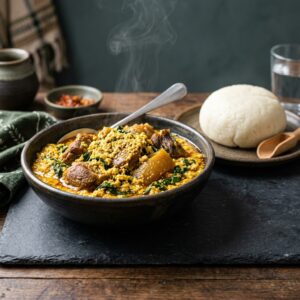
Quick Answer: Authentic Nigerian Egusi Soup is a rich, savory, and nutty classic made from ground egusi seeds (melon seeds) cooked in palm oil, broth, and leafy vegetables, then paired with assorted meats and fish. By using the popular frying method, the ground melon seeds are gently toasted in palm oil to create distinct, delicious curd-like lumps that pair beautifully with swallows like pounded yam, eba, or fufu.
The Cultural and Culinary Heritage of Egusi Soup
In the culinary landscape of West Africa, few dishes command as much reverence and universal appeal as Egusi soup. Originating from the culinary traditions of the Igbo, Yoruba, and other ethnic groups of Nigeria, this soup has evolved into a national treasure and a symbol of communal warmth. Historically, it is the ultimate Sunday dinner highlight, a centerpiece at traditional weddings, and the comfort food that welcomes travelers back home.
The star ingredient, egusi (also known as white melon seed), comes from specific gourds belonging to the Cucurbitaceae family. While the fruit itself is dry and bitter, the seeds inside are highly valued for their high protein and oil content. In West African households, shelling egusi seeds was traditionally a social activity—family members gathered to peel the white shells by hand while exchanging stories and songs. Today, while pre-shelled and pre-milled options like blended egusi offer modern convenience, the communal spirit and cultural significance of the soup remain intact.
The Science of Flavor: Fermentation and Umami Dynamics
What makes an Authentic Nigerian Egusi Soup Recipe truly unforgettable is its complex, layered flavor profile. Ground egusi seeds themselves have a mild, creamy, and slightly sweet flavor. However, when combined with palm oil, native spices, and fermented condiments, they undergo a flavor transformation.
The depth of the soup relies on fermented melon seeds and the traditional addition of iru (fermented locust beans) or ogiri (fermented oil bean paste). These fermented ingredients introduce a powerful punch of natural glutamates (umami) that balance the rich, fatty nature of the melon seeds and palm oil. Additionally, toasted ground crayfish, smoked stockfish (panla), and dried bush fish contribute layers of smoky, savory, and briny undertones. When these elements simmer together, the melon seeds absorb the spiced broth, resulting in a rich taste that is uniquely West African.
Frying vs. Boiling: Choosing Your Egusi Cooking Method
While there are several regional variations of preparing this dish, the two most prominent techniques are the Frying (Lumpy) Method and the Boiling (Smooth/Caking) Method. Choosing the right method depends on your preferred texture and the time you have available.
| Feature | Frying (Lumpy) Method | Boiling (Smooth) Method |
|---|---|---|
| Texture | Chewy, distinct curd-like lumps resembling scrambled eggs. | Smooth, creamy, and uniform consistency. |
| Cooking Time | 45 to 60 minutes (requires frying the melon paste first). | 35 to 45 minutes (simmered directly in stock). |
| Oil Usage | Higher (requires sufficient palm oil to toast the paste). | Moderate to low (oil can be added at any point or reduced). |
| Complexity | Medium (requires careful temperature control to avoid burning). | Low (straightforward simmering without scorching risks). |
Ingredients for Authentic Nigerian Egusi Soup
To cook a classic, restaurant-quality Egusi soup using the frying method, you will need the following premium ingredients:
- Ground Egusi: 2 cups of clean, finely ground blended egusi seeds.
- Palm Oil: 1 cup of quality, unrefined red palm oil.
- Assorted Meats & Seafood: 500g of beef, tripe (shaki), cowfoot, smoked fish, and stockfish.
- Pepper Base: 2 red bell peppers (tatashe), 2 scotch bonnet peppers (ata rodo), and 1 large onion, blended together.
- Aromatics & Umami: 2 tablespoons of ground crayfish, 2 tablespoons of fermented locust beans (iru), and 1 medium onion (diced).
- Vegetables: 2 cups of freshly chopped Ugu (fluted pumpkin leaves), spinach, or bitter leaf from our traditional vegetables category.
- Seasoning: 2-3 seasoning cubes, salt to taste, and 2 cups of rich beef or chicken stock.
Step-by-Step Cooking Guide (Frying Method)
Follow these steps to master the authentic frying method and achieve the perfect texture:
Step 1: Prep and Season the Meats
In a large pot, combine your beef, shaki, and cowfoot with half of a chopped onion, seasoning cubes, and salt. Cook on medium heat in its own juices for 10 minutes, then add 2-3 cups of water. Add the cleaned stockfish and cook until all meats are tender. Strain and save the flavorful broth (stock) for later; set the cooked meats aside.
Step 2: Create the Egusi Paste
In a bowl, mix your ground egusi seeds with a small amount of warm water or meat stock. Stir until a thick, smooth paste is formed. Set this paste aside; this step helps the egusi form solid, distinct lumps during frying.
Step 3: Fry the Egusi Paste
Heat the palm oil in a clean pot on medium-low heat. Add the remaining chopped onions and the fermented locust beans (iru), and sauté for 2 minutes. Using a spoon, scoop small chunks of the egusi paste into the hot oil. Do not stir immediately. Cover the pot and let the paste steam in the oil on low heat for about 5 to 7 minutes until the chunks firm up. Gently flip the chunks, then break them down slightly into your desired lump size using a wooden spoon.
Step 4: Incorporate the Pepper Base and Cook
Pour the blended pepper mix into the pot, stirring gently to avoid breaking the lumps completely. Fry the mixture on low heat for 10 to 15 minutes, stirring occasionally to prevent the bottom from burning, until the oil begins to separate and float to the top.
Step 5: Add Stock and Meats
Pour in the reserved meat stock, cooked meats, stockfish, smoked fish, and ground crayfish. Stir gently to combine. Cover the pot and let it simmer on medium-low heat for 15 minutes, allowing the egusi lumps to absorb the rich flavors of the broth.
Step 6: Fold in the Vegetables
Lower the heat and add your chopped leafy greens, such as ugu or spinach from our traditional vegetables. Stir thoroughly and simmer for another 3 minutes. Turn off the heat and let the residual warmth complete the cooking process. Serve warm with your choice of swallow.
Troubleshooting & Pro Tips
- Preventing Egusi from Burning: Egusi seeds contain natural sugars and proteins that burn easily. Always cook on medium-low heat, use a heavy-bottomed pot, and stir the bottom of the pot regularly once the pepper base is added.
- Achieving Perfect Lumps: Do not stir the soup immediately after scooping the egusi paste into the hot palm oil. Let the paste cook and form a crust first before gently stirring. Mixing a beaten egg into the paste before frying can also help hold the lumps together.
- Balancing Excess Oil: If palm oil pools heavily at the top of the soup, tilt the pot slightly and skim off the excess oil with a ladle. This oil can be saved and reused for other traditional recipes.
- Vegetable Selection: For a traditional touch, use Ugu (fluted pumpkin leaves) or bitter leaf. If using bitter leaf, ensure it is thoroughly washed to remove excess bitterness before adding it to the soup. If these are unavailable, baby spinach serves as an excellent, mild alternative.