Blog
What Is Suya? Nigeria’s Iconic Street Food Explained
Quick Answer: Suya is a legendary Nigerian street food made from skewered, thinly sliced cuts of meat—traditionally beef, ram, or chicken—marinated in a complex, peanut-based spice blend known as Yaji before being flame-grilled over open hardwood charcoal. Originating from the Hausa people of Northern Nigeria, this iconic culinary masterpiece is renowned for its signature smoky aroma, fiery heat, and nutty flavor profile, making it a staple of West African night-market culture.
The Soul of the Street: Introduction to Nigeria’s Iconic Suya
As dusk settles over Lagos, Abuja, Kano, and virtually every urban center across Nigeria, a sensory transformation takes place. Above the din of honking horns and street chatter rises a thin, blue veil of fragrant smoke. This smoke carries with it the irresistible, mouth-watering aroma of roasting meat, toasted peanuts, pungent ginger, and hot peppers. Follow this olfactory trail to its source, and you will find a Mai Suya—the traditional suya master—standing before a glowing, charcoal-filled metal drum, deftly turning skewers of skewered meats. This is the world of Suya, Nigeria’s undisputed national street food.
Suya is far more than just grilled meat on a stick; it is a unifying cultural phenomenon that cuts across tribal, economic, and religious divides. Rich or poor, young or old, Nigerians gather around the suya spot in the evening, waiting patiently as their orders are sliced, seasoned, grilled, and wrapped in newspaper alongside raw red onions, cabbage, and extra dry pepper. To understand suya is to understand the vibrant, nocturnal pulse of Nigerian culinary heritage.
Cultural and Historical Roots: The Hausa Mallams and Northern Heritage
The history of suya is deeply rooted in the pastoralist traditions of Northern Nigeria. The creators and traditional custodians of this culinary art are the Hausa and Fulani peoples. Historically nomadic or semi-nomadic cattle herders, these communities developed specialized methods of preserving and cooking meat over open campfires during long migrations. The knowledge of meat selection, curing, spices, and open-flame cooking was passed down through generations, eventually coalescing into the street food we know today.
In modern Nigerian society, the title of Mai Suya (literally meaning “one who fries/grills suya” in the Hausa language) is held in high esteem. These grill masters, traditionally Hausa men, are often referred to as Mallams. A true Mai Suya possesses an almost instinctive understanding of fire management, meat textures, and spice balance. The traditional recipe has remained closely guarded, particularly the exact ratios of the spice mix. The spread of the Hausa people throughout West Africa brought this delicious preparation to neighboring countries like Ghana, Cameroon, and Niger, where it is known by names such as chichinga or soya, cementing its status as a West African treasure.
The Alchemy of Yaji: The Magic Suya Seasoning
The defining element that elevates suya from basic grilled meat to an extraordinary sensory experience is Yaji, commonly referred to as Suya spice. Yaji is a complex dry rub that blends heat, earthiness, umami, and nuttiness into a cohesive seasoning. The backbone of authentic Yaji is Kuli-Kuli—a dry, crunchy snack made from ground, defatted roasted peanuts. The peanuts are crushed into a fine meal, acting as a thickener that clings to the meat, caramelizes under the heat, and imparts a rich, toasted flavor.
Beyond peanuts, a traditional Yaji blend features a powerhouse of botanicals:
- Ginger (Fura): Delivers a sharp, aromatic, and warming bite that balances the richness of the meat.
- Cayenne Pepper (Shombo) & Chili Powder: Provides the signature fiery kick that stimulates the palate.
- Garlic: Adds a deep, savory foundation.
- Alligator Pepper & Negro Pepper (Uda): Introduces complex herbal, citrusy, and slightly medicinal undertones.
- Salt & Bouillon Cubes: Amplifies the natural umami flavors of the proteins.
When the meat is coated in this seasoning and exposed to fire, the natural oils from the peanuts and the rendered fat from the meat combine, creating a flavorful crust that seals in juices while developing caramelized, charred edges.
Scientific & Nutritional Breakdown of Suya Variations
While beef remains the classic choice for suya, the grill grates of a Mai Suya accommodate a diverse range of proteins, each offering distinct textures, fat contents, and nutritional profiles. From a scientific standpoint, the combination of lean protein and healthy fats from the peanut-based marinade makes suya a highly satisfying, low-carb food. The spices used, such as ginger and chili, contain bioactive compounds like gingerol and capsaicin, which have been studied for their thermogenic and anti-inflammatory properties, as detailed by health authorities like Healthline.
To help you choose your perfect skewer, here is a detailed comparative breakdown of the most popular suya variations:
| Suya Variant | Meat Cut Used | Texture Profile | Flavor Intensity | Nutritional Highlights |
|---|---|---|---|---|
| Beef Suya | Flank, sirloin, or round steak | Tender with a slight, satisfying chew | Rich, deeply savory, and robust | High in iron, zinc, and bioavailable protein. Best paired with high-quality beef cuts. |
| Ram Suya | Leg of ram or shoulder cuts | Dense, chewy, and highly succulent | Gamey, intense, and deeply traditional | Rich in essential fatty acids and B-vitamins; favored for festive celebrations. |
| Chicken Suya | Boneless chicken thighs or breasts | Soft, juicy, and highly tender | Mild, allowing spices to shine brightly | Lean, lower in saturated fats, high in selenium. |
| Gizzard Suya | Chicken or turkey gizzards | Firm, springy, and distinctly crunchy | Savory with a rich, iron-like depth | Extremely high in lean protein, low in fat, packed with micronutrients like vitamin B12. |
For those looking to recreate this authentic experience at home, sourcing the correct cuts of meat is essential. Opting for clean, premium cuts of beef ensures your suya remains tender and juicy without turning tough on the grill.
Step-by-Step Practical Guide: How to Make Authentic Nigerian Suya
Recreating the magic of a Nigerian street corner in your backyard or kitchen requires attention to meat preparation, spice application, and heat control. Follow this authentic guide to achieve that signature smoky, sizzling result.
Ingredients Checklist
- 1 lb (450g) lean beef flank, sirloin, or chicken thighs
- 1/2 cup authentic Yaji (Suya spice blend)
- 2 tablespoons vegetable oil or peanut oil (plus more for basting)
- 1 teaspoon salt
- 1 red onion, thinly sliced (for serving)
- 1/4 head of white cabbage, shredded (for serving)
- Bamboo skewers (soaked in water for 30 minutes to prevent burning)
The Preparation Process
Step 1: Slice the Meat Thinly. The secret to quick-cooking, tender suya is slicing the meat into paper-thin, wide strips. To make slicing easier, place the meat in the freezer for 30 to 45 minutes until firm but not rock-hard. Using a sharp knife, slice across the grain at an angle to ensure tenderness.
Step 2: Thread onto Skewers. Carefully thread the sliced meat onto your soaked bamboo skewers in an accordion-style weave. Push the meat flat against the skewer to ensure even cooking.
Step 3: The First Seasoning. Lightly brush the skewered meat with vegetable oil. Dredge each skewer generously in the Yaji spice mix, patting the spice coat onto the meat so it forms a thick, even layer. Let the meat marinate at room temperature for 30 minutes, allowing the spices to penetrate the muscle fibers.
Step 4: Fire Up the Grill. Prepare your grill for medium-high heat. Hardwood charcoal is highly recommended to achieve the authentic smoky undertone of street suya. Clean and oil the grill grates.
Step 5: The Cook and Sizzle. Place the skewers on the hot grill. You should immediately hear a satisfying hissing sizzle as the meat contacts the heat. Grill for 3 to 4 minutes on the first side. As the spices begin to toast, baste the top side with a little oil mixed with a pinch of Yaji.
Step 6: Flip and Baste. Turn the skewers over. The cooked side should feature a beautiful mahogany-colored crust with lightly charred edges. Baste the flipped side. Grill for another 3 to 4 minutes until the meat is fully cooked but still succulent. Do not overcook beef suya, as it can dry out quickly.
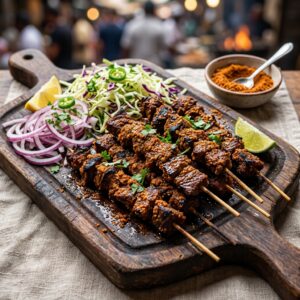
Step 7: Serve the Street Way. Remove the skewers from the grill. Let them rest for 2 minutes. Slice the warm meat off the skewers directly onto a serving plate or butcher paper. Garnish generously with raw sliced red onions, cabbage, and extra Yaji spice on the side for dipping.
Troubleshooting & Pro Tips for Perfect Suya
Even with the right ingredients, grilling suya at home can present a few challenges. Use these expert tips to troubleshoot common issues and elevate your suya game:
- How to Make the Yaji Stick: If your spice blend is falling off the meat, your meat might be too wet. Thoroughly pat the sliced meat dry with paper towels before oiling and dusting with Yaji. The thin layer of oil acts as a binder, locking the peanut powder in place.
- Preventing Dryness: Lean beef cuts dry out easily. Keep a small bowl of basting oil (oil mixed with a spoonful of Yaji) nearby and brush it onto the meat during the final minutes of grilling. The oil mimics the rendering fat of street grills, keeping the protein moist.
- Recreating the Smoky Street Flavor Indoors: If you are using an oven broiler or a grill pan instead of a charcoal grill, you can add a tiny drop of high-quality liquid smoke to your basting oil, or finish the dish by placing a glowing piece of charcoal in a foil cup inside your oven/pot for a few minutes to smoke-infuse the meat.
Conclusion: Experience the Taste of Nigeria
Suya is more than just a dish; it is a culinary journey into the heart of West African street culture. With its bold heat, nutty depth, and enticing smoky aroma, it has captured the taste buds of food lovers globally. Whether you enjoy it from a local Mai Suya on a bustling street corner or recreate it in your own kitchen using authentic seasonings and prime cuts, suya represents the warmth, spice, and vibrant energy of Nigeria.