Blog
Nigerian Puff Puff Recipe — Soft, Fluffy African Doughnuts
Quick Answer: Authentic Nigerian puff puff is a beloved West African street food made from a simple yeast dough of flour, sugar, yeast, water, and nutmeg, deep-fried to golden, airy spheres. To achieve a soft, fluffy texture, the key is proper yeast activation, a warm environment for proofing, and maintaining a frying oil temperature of 350°F (177°C) to ensure the doughnuts cook through without absorbing excess oil. Read on to master the traditional hand-scooping technique and learn how to troubleshoot flat or heavy dough.
The Soul of West African Street Food: History and Culture of Puff Puff
In Nigeria, puff puff is far more than just a sweet treat; it is a cultural institution. From the bustling roadside stalls where vendors fry them in giant cast-iron cauldrons over open flames to high-end weddings and corporate events, this humble snack brings people together. It is a cornerstone of Nigerian “small chops”—the assortment of finger foods (including samosas, spring rolls, and peppered gizzard) served at almost every social gathering, party, and celebration.
While known as puff puff in Nigeria and Cameroon, this deep-fried yeast dough has close relatives across the African continent and beyond. In Ghana, it is called bofrot; in East Africa (Kenya, Tanzania, and Uganda), it is known as mandazi or mahamri (which usually contains coconut milk and cardamom); and in Francophone countries like the Republic of the Congo and Democratic Republic of the Congo, it goes by mikate. Historically, the West African puff puff shares striking similarities with the French beignet and the Dutch oliebollen, reflecting centuries of culinary exchange and adaptation.
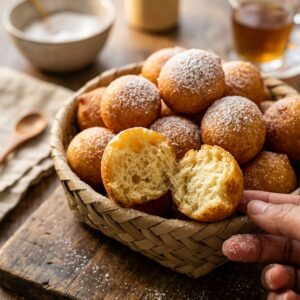
Unlike Western doughnuts, traditional Nigerian puff puff does not use eggs, butter, or milk. Its simplicity is its strength, relying on the magic of yeast fermentation to create a chewy, pillowy interior webbed with air pockets, encased in a thin, crispy, golden-brown crust. A subtle hint of aromatic nutmeg adds that signature warming undertone that distinguishes Nigerian puff puff from generic fried dough.
Yeast Science: Choosing the Right Leavening Agent
The secret to a perfect soft fluffy puff puff lies in how the yeast dough ferments and rises. The type of yeast you use determines not only the preparation time but also the depth of flavor and the final texture of your African snack. To understand the biochemical reactions at play during fermentation, check out this comprehensive guide on the science of yeast in baking.
Here is how the three main leavening options compare when making Nigerian puff puff:
| Yeast Type | Proofing/Rise Time | Resulting Texture | Flavor Profile |
|---|---|---|---|
| Instant (Rapid Rise) Yeast | 45 – 60 minutes | Very light, airy, soft, and highly spherical. | Mild, sweet, and clean; dominated by flour and sugar. |
| Active Dry Yeast | 60 – 90 minutes | Pillowy with a slightly chewier crumb. | Classic yeasty aroma with a balanced, sweet undertone. |
| Sourdough Starter (Wild Yeast) | 4 – 6 hours | Dense, artisanal crumb with irregular air bubbles. | Tangy, complex, and deeply savory-sweet. |
Ingredients Checklist
Before you begin, gather these essential ingredients. For the best results, use high-quality pantry staples:
- All-Purpose Flour: 4 cups (approx. 500g) of premium flour. You can explore options in our Flours & Meals Collection.
- Granulated Sugar: 1/2 cup to 3/4 cup (adjust to your sweetness preference).
- Yeast: 2.5 teaspoons of instant yeast (or active dry yeast).
- Nutmeg: 1 teaspoon of freshly grated nutmeg for that authentic West African aroma. Visit our Spices & Seasonings Category to source premium spices.
- Warm Water: 2 cups (warm to the touch, approximately 105°F to 110°F). Warm water activates the yeast enzymes without killing the organisms.
- Salt: A pinch (about 1/2 teaspoon) to balance the sweetness.
- Frying Oil: Vegetable oil, canola oil, or peanut oil (enough for deep-frying, at least 3 inches deep).
Step-by-Step Cooking Guide to Perfect Spherical Puff Puff
Step 1: Activating the Yeast (Proofing)
If you are using active dry yeast, you must activate it first. Dissolve the yeast and 1 tablespoon of the sugar in 1/2 cup of the warm water. Let it sit for 5 to 10 minutes until a thick, frothy foam forms on the surface. If you are using instant yeast, you can skip this step and mix it directly with the dry ingredients, but proofing is still recommended to ensure your yeast is alive and active.
Step 2: Mixing the Batter
In a large mixing bowl, whisk together the flour, remaining sugar, salt, and freshly grated nutmeg. Pour in the activated yeast mixture and the remaining warm water. Using a wooden spoon, silicone spatula, or clean hands, mix vigorously until you get a smooth, stretchy batter. The consistency should be thicker than pancake batter but looser than bread dough—it should fall off your spoon easily but hold its shape slightly. Beat the batter for 2-3 minutes to develop the gluten network, which traps carbon dioxide gas during proofing.
Step 3: The Proofing Phase
Cover the bowl tightly with plastic wrap and place a clean kitchen towel over it. Move the bowl to a warm, draft-free place (such as an unlit oven or near a sunny window). Let the batter rise for 45 to 60 minutes (or up to 90 minutes if using active dry yeast). When ready, the batter should have doubled in size, showing a highly bubbly, airy surface and emitting a sweet, fermented yeast aroma.
Step 4: The Oil Temperature Test
Pour at least 3 inches of frying oil into a deep pot or Dutch oven. Heat the oil over medium heat. To test if the oil is ready, drop a tiny dollop of batter into the pot. If it sinks to the bottom and stays there, the oil is too cold. If it rises immediately and turns dark brown within seconds, the oil is too hot. Ideally, the batter should sink briefly, bubble rapidly, and float to the top within 2 to 3 seconds, turning light golden brown. If you have a kitchen thermometer, aim for a steady temperature between 350°F and 360°F (177°C to 182°C).
Step 5: Mastering the Hand-Scooping Technique
To get that perfect street-style round shape, use the traditional hand-scooping method. Wash your hands thoroughly. Punch down the proofed batter slightly. Dip your dominant hand into the batter, grab a small handful, and squeeze it through the gap between your thumb and index finger (creating a fist). As the batter emerges as a clean, round ball at the top of your fist, use your other hand or your thumb to slide the dough ball directly into the hot oil. Alternatively, you can use a greased ice cream scoop or a ziplock bag with a corner cut off, though hand-scooping yields the most authentic spheres.
Step 6: Frying to Golden Perfection
Do not overcrowd the pot; fry in batches to maintain a stable oil temperature. Use a slotted spoon or butter knife to flip the puff puff balls continuously so they color evenly. Fry for 3 to 5 minutes until they are a deep, uniform golden-brown color. Remove them with a slotted spoon and drain them on a wire rack or a plate lined with paper towels to absorb excess oil.
Troubleshooting & Pro Tips
Even seasoned home cooks occasionally struggle to get the perfect round shape or fluffy texture. Here is how to fix common puff puff mistakes:
- Why is my puff puff flat and oily? This happens when the oil temperature is too low. The batter absorbs oil before the outer crust can sear and expand, resulting in heavy, greasy, flat shapes. Keep your oil at 350°F.
- Why are my dough balls forming tails? If your dough has “tails” or looks like amoebas, the batter is likely too watery or you didn’t scoop it quickly enough. Add 2 to 3 tablespoons of flour to thicken the batter slightly, and practice a swift, clean drop when scooping.
- My dough won’t rise! What do I do? If your dough remains flat after an hour, the water used might have been too hot (killing the yeast) or too cold (keeping it dormant). To fix this, dissolve 1 teaspoon of yeast in 3 tablespoons of lukewarm water with a pinch of sugar, wait until it froths, and gently fold it into your flat batter. Let it sit in a warm spot for another 30 minutes.
- Serving suggestions: While delicious plain, you can roll your hot puff puff in powdered sugar, cinnamon sugar, or drizzle them with chocolate sauce. Pair them with a cold bottle of hibiscus tea (Zobo) or ginger beer for the ultimate street food experience.